Breadcrumb Home News and Events News and Events (in Russian for the time being) - Any -EventsResearchMission StatusAwardsEducationPopular scienceSave The DateIn Memoriam In Search For Hidden Carbon A new information system Uglerod-E developed at IKI will be used to monitor carbon ("uglerod" is Russian for "carbon") in the forests and other ecosystems. Bright, Energetic, and Puzzling Russian Mikhail Pavlinsky ART-XC X-ray telescope onboard Spektr-RG observatory (Roscosmos) and Russian KONUS instrument onboard WIND spacecraft (NASA), residing in two opposite Lagrange points L1 and L2, have provided a detailed study of GRB 221009A — the brightest of all gamma-ray bursts previously registered by Konus and most likely the brightest one in the whole history of mankind. Carbon Deposits Volume in the Forests of Russia Estimated To get the values, researchers used Earth remote sensing data, selected ground-based observations, and models. Spektr-RG In a Round Dance Spektr-RG, James Webb Space Telescope, and Gaia space observatories circle around L2 point. Animations by Natan Eismon and Maxim Pupkov from the Department of Space Dynamics and Mathematical Information Processing. Coma Cluster in X-Rays and Radio Astrophysicists from IKI and Ioffe Institute, using the data from SRG/eROSITA space telescope, studied the properties of a shock in Coma cluster of galaxies. The paper summarising their results was accepted for publication in Astronomy&Astrophysics. Eight Exoplanet Candidates Discovered By Russian Robotic Telescope System These are the results of the project "Theoretical and experimental studies of extrasolar planetary systems' formation and evolution and parameters of exoplanets", currently under implementation. Shock Waves Can Explain Why Solar Wind Is Not That Cold In the Distant Solar System IKI researchers suggested the mechanism, which can explain unexpected heating of solar wind at large distances from the Sun. Results of the study, which was supported by Russian Science Foundation, are published in Astronomy& Astrophysics. Volcanic Eruption From the Past For the first time, the motion dynamics of an eruptive cloud, which formed during the catastrophic eruption of the Sheveluch volcano on November 11, 1964 (Volcanic Explosivity Index 4+), was reconstructed thanks to modern data processing methods and the databases of meteorological data. Getting grips on a strongly magnetized neutron star geometry Researchers from the Space Research Institute and their colleagues determined geometrical parameters of a neutron star floating in the Galaxy 21,000 light years away. The finding confirms old ideas that this star precesses like a whirligig. The results were published in Nature Astronomy. Сачок для гамма-всплесков 9 октября 2022 года произошел один из самых ярких гамма-всплесков за всю историю их наблюдений. Он не попал в поле зрения телескопа ART-XC им. М.Н. Павлинского, но именно благодаря этому удалось надежно измерить кривую его блеска в жестком рентгеновском — мягком гамма-диапазонах. Как же это получилось? Pagination First page « Previous page ‹ … Page 4 Page 5 Current page 6 Page 7 Page 8 … Next page › Last page » IKI in Media Weekly Digests (in Russian) 22.04.2024 — 29.04.2024 May 2, 2024 15.04.2024 — 22.04.2024 April 22, 2024 08.04.2024 — 15.04.2024 April 15, 2024 01.04.2024 — 08.04.2024 April 8, 2024 Pagination First page « Previous page ‹ … Page 18 Page 19 Page 20 Page 21 Current page 22 Page 23 Page 24 Page 25 Page 26 … Next page › Last page » News by tags Conferences High-Energy Astrophysics Today and Tomorrow 2025 (HEA-2025) December 22—25, 2025 Registration and abstract submission deadline: November 10, 2025 21st annual conference Plasma Physics in the Solar System February 9–13, 2026 Registration till December 23, 2025, thesis submission till January 12, 2026 23rd international conference Modern Problems of the Earth Remote Sensing November 10–14, 2025 Abstract submission closed. Registration deadline November 3, 2025. IKI Media Service website (archive, in Russian)
In Search For Hidden Carbon A new information system Uglerod-E developed at IKI will be used to monitor carbon ("uglerod" is Russian for "carbon") in the forests and other ecosystems.
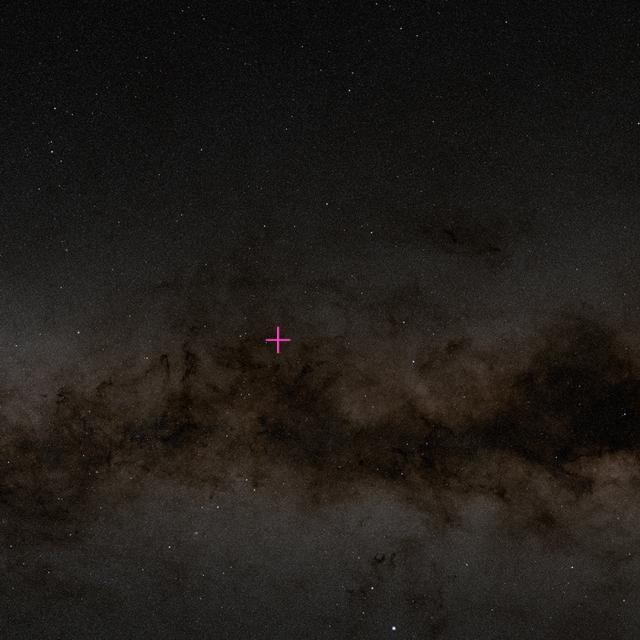
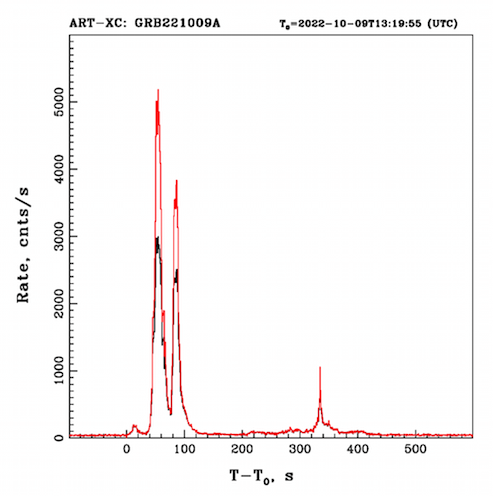
Bright, Energetic, and Puzzling Russian Mikhail Pavlinsky ART-XC X-ray telescope onboard Spektr-RG observatory (Roscosmos) and Russian KONUS instrument onboard WIND spacecraft (NASA), residing in two opposite Lagrange points L1 and L2, have provided a detailed study of GRB 221009A — the brightest of all gamma-ray bursts previously registered by Konus and most likely the brightest one in the whole history of mankind.
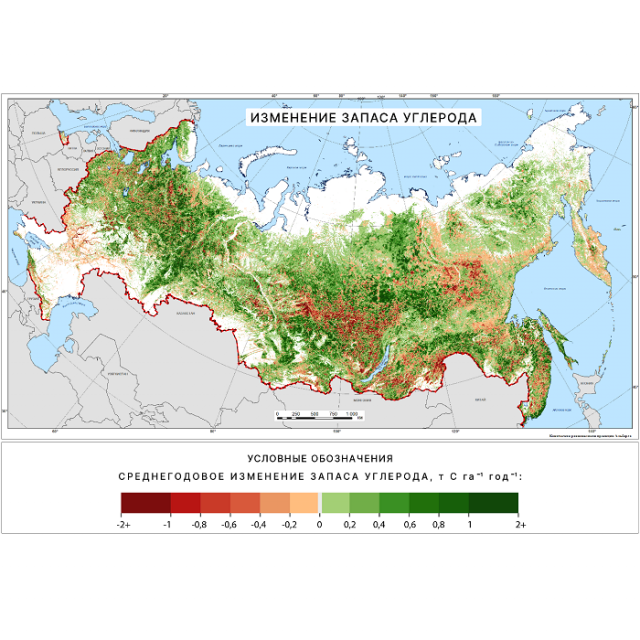
Carbon Deposits Volume in the Forests of Russia Estimated To get the values, researchers used Earth remote sensing data, selected ground-based observations, and models.
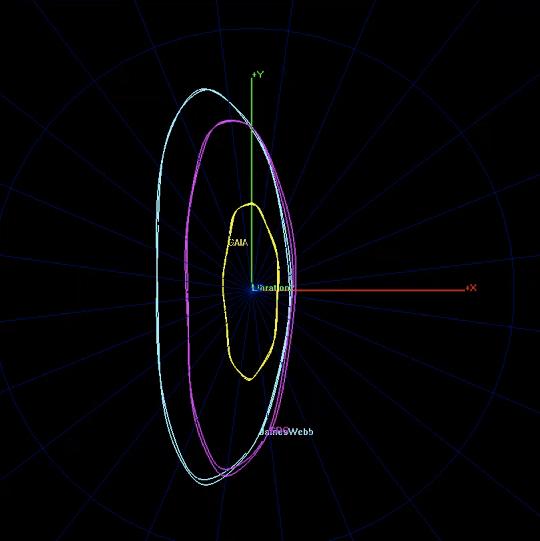
Spektr-RG In a Round Dance Spektr-RG, James Webb Space Telescope, and Gaia space observatories circle around L2 point. Animations by Natan Eismon and Maxim Pupkov from the Department of Space Dynamics and Mathematical Information Processing.
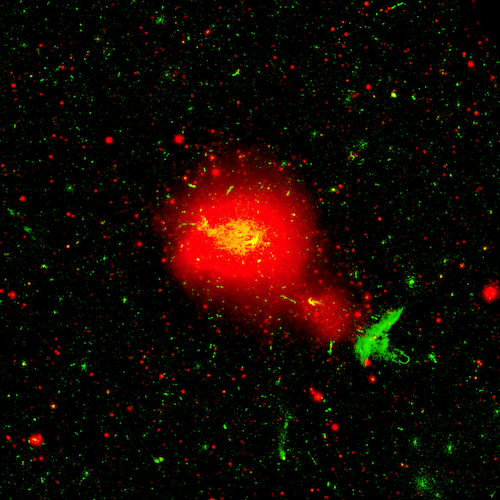
Coma Cluster in X-Rays and Radio Astrophysicists from IKI and Ioffe Institute, using the data from SRG/eROSITA space telescope, studied the properties of a shock in Coma cluster of galaxies. The paper summarising their results was accepted for publication in Astronomy&Astrophysics.
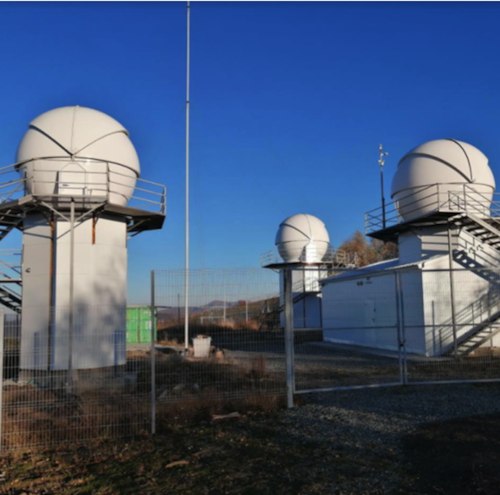
Eight Exoplanet Candidates Discovered By Russian Robotic Telescope System These are the results of the project "Theoretical and experimental studies of extrasolar planetary systems' formation and evolution and parameters of exoplanets", currently under implementation.
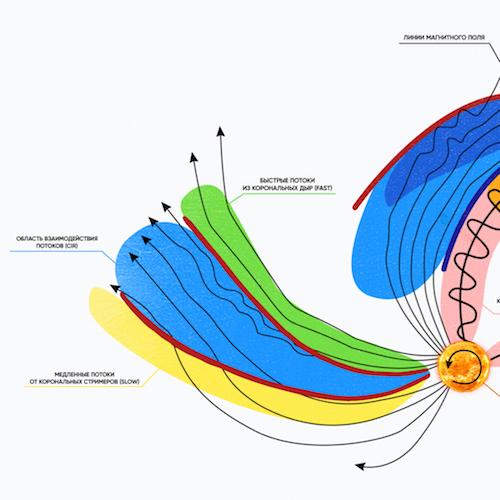
Shock Waves Can Explain Why Solar Wind Is Not That Cold In the Distant Solar System IKI researchers suggested the mechanism, which can explain unexpected heating of solar wind at large distances from the Sun. Results of the study, which was supported by Russian Science Foundation, are published in Astronomy& Astrophysics.
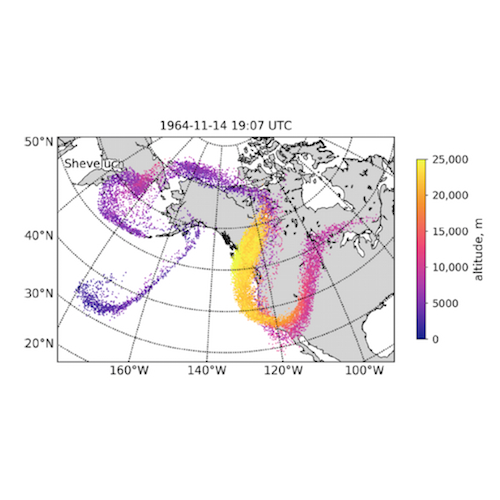
Volcanic Eruption From the Past For the first time, the motion dynamics of an eruptive cloud, which formed during the catastrophic eruption of the Sheveluch volcano on November 11, 1964 (Volcanic Explosivity Index 4+), was reconstructed thanks to modern data processing methods and the databases of meteorological data.
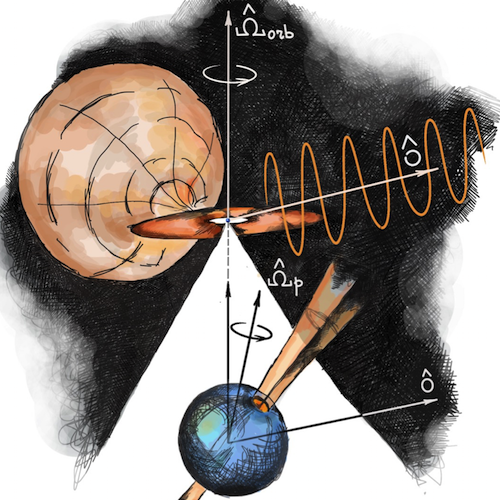
Getting grips on a strongly magnetized neutron star geometry Researchers from the Space Research Institute and their colleagues determined geometrical parameters of a neutron star floating in the Galaxy 21,000 light years away. The finding confirms old ideas that this star precesses like a whirligig. The results were published in Nature Astronomy.
Сачок для гамма-всплесков 9 октября 2022 года произошел один из самых ярких гамма-всплесков за всю историю их наблюдений. Он не попал в поле зрения телескопа ART-XC им. М.Н. Павлинского, но именно благодаря этому удалось надежно измерить кривую его блеска в жестком рентгеновском — мягком гамма-диапазонах. Как же это получилось?