Breadcrumb Home News and Events News and Events (in Russian for the time being) - Any -EventsResearchMission StatusAwardsEducationPopular scienceSave The DateIn Memoriam Solar System From Outside The model describing the infrared radiation of interstellar dust inside the Solar system may help with the studies of the activity of far-away stars. How Much Water Hides Below Venusian Clouds? Using data from Venus Express SPICAV infrared spectrometer, IKI scientists determined the ratio of water vapour in the lowest layers of Venusian atmosphere. Depending on the model, it is 23.6–27.7 ppmv and does not depend on the local time or season. Results are published in Atmosphere journal. Galactic Centre In X-Rays Mikhail Pavlinsly ART-XC X-ray telescope studies the properties of the nuclear stellar disc of the Milky Way. Oil Spill in the Black Sea Seen From Space On the morning of 29 August 2025, while loading oil onto the Turkish tanker T. Semahat at the CPC (Caspian Pipeline Consortium) marine terminal, a hose ruptured and oil spilled into the sea. Specialists from IKI and the P. P. Shirshov Institute of Oceanology of the RAS monitor the area of the accident using the capabilities of the IKI-Monitoring Centre For Collective Use. Volcanoes' Eruptions In July And August 2025 Seen From Space Two volcanoes on Kamchatka peninsula began erupting. On 30 July 2025 the Kluychevskoy volcano, and on 2 August the Krasheninnikov volcano — which had been dormant for more than 500 years. Scientists monitor these events, using among other methods the VolSatView monitoring system. Powerful Quasar Uncovered by Mikhail Pavlinsky ART-XC Telescope During its all-sky survey, Mikhail Pavlinsly ART-XC telescope aboard the Spektr-RG observatory discovered a previously unknown X-ray source, SRGA J230631.0+155633. Further studies revealed that this is one of the most powerful and interesting quasars that have existed in the Universe over the past five billion years. Waiting for Mercury The exosphere of Mercury has little magnesium and contains helium. Some details about its structure are currently being revealed by the PHEBUS instrument aboard the BepiColombo interplanetary mission — an ultraviolet spectrometer developed with IKI participation. PHEBUS observed Mercury during several flybys and is now preparing to operate in scientific orbit, which it is to entere at the end of 2026. Papers on these preliminary results were published in the Journal of Geophysical Research: Planets. Mikhail Pavlinsky ART-XC Telescope Detected Solar Cosmic Rays Rise On April 1 It was not a joke: on the first day of the month the number of energetic solar protons near the Lagrange point L2 increased significantly to around 14 counts per second. This was almost 7 times higher than usual background, registered by ART-XC detectors, and the most prominent rise in 5 years of monitoring Sun's activity. The Most Splendiferous Supernova Remnant In the Galaxy The team of astrophysicists from IKI and other organizations used X-ray data collected by SRG/eROSITA telescope onboard Spektr-RG observatory to look into the hot interior of the S147/Spaghetti nebula and explain its unusual properties. Icebreakers And Satellites Work Together In Arctic 28th February in Russia is Arctic Day. Satellite remote sensing data are crucial for those, who study and work here. IKI scientists develop special algorithms for satellite microwave radiometry and run subsatellite experiments to refine the models, which are used for data processing. Results of such experiment, organized together with Arctic and Antarctic Research Institute and Atomflot, are already included in the database of IKI-Monitoring center of collective use. Pagination Current page 1 Page 2 Page 3 Page 4 Page 5 … Next page › Last page » IKI in Media Weekly Digests (in Russian) 23.05.2022 — 30.05.2022 May 30, 2022 16.05.2022 — 23.05.2022 May 23, 2022 09.05.2022— 16.05.2022 May 16, 2022 02.05.2022 — 09.05.2022 May 9, 2022 Pagination First page « Previous page ‹ … Page 43 Page 44 Page 45 Page 46 Current page 47 Page 48 Page 49 Page 50 Page 51 … Next page › Last page » News by tags Conferences High-Energy Astrophysics Today and Tomorrow 2025 (HEA-2025) December 22—25, 2025 Registration and abstract submission deadline: November 10, 2025 21st annual conference Plasma Physics in the Solar System February 9–13, 2026 Registration till December 23, 2025, thesis submission till January 12, 2026 23rd international conference Modern Problems of the Earth Remote Sensing November 10–14, 2025 Abstract submission closed. Registration deadline November 3, 2025. IKI Media Service website (archive, in Russian)
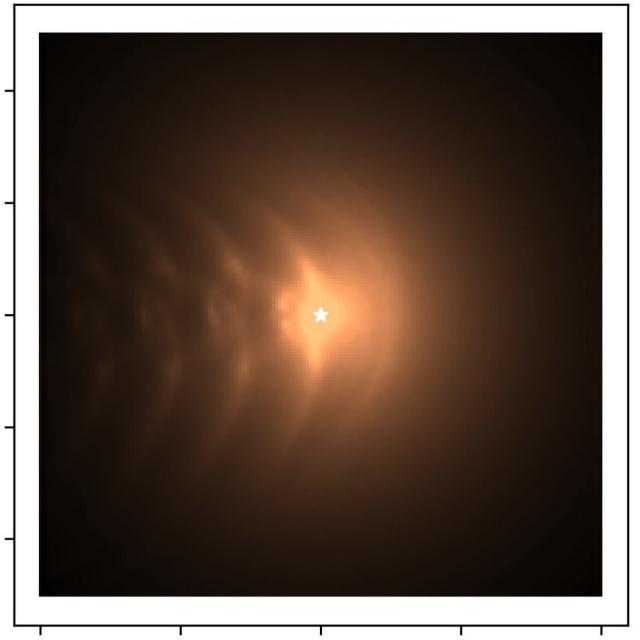
Solar System From Outside The model describing the infrared radiation of interstellar dust inside the Solar system may help with the studies of the activity of far-away stars.
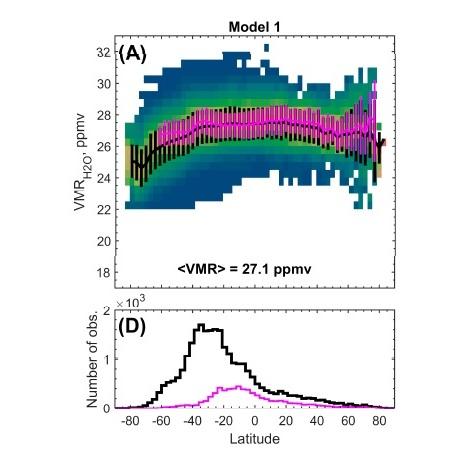
How Much Water Hides Below Venusian Clouds? Using data from Venus Express SPICAV infrared spectrometer, IKI scientists determined the ratio of water vapour in the lowest layers of Venusian atmosphere. Depending on the model, it is 23.6–27.7 ppmv and does not depend on the local time or season. Results are published in Atmosphere journal.
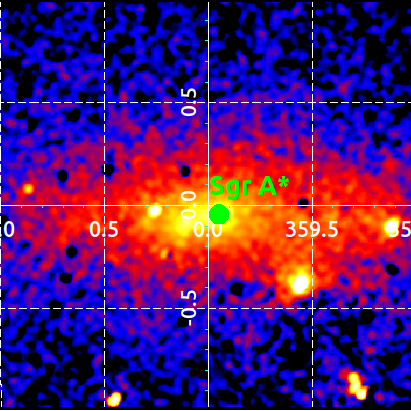
Galactic Centre In X-Rays Mikhail Pavlinsly ART-XC X-ray telescope studies the properties of the nuclear stellar disc of the Milky Way.
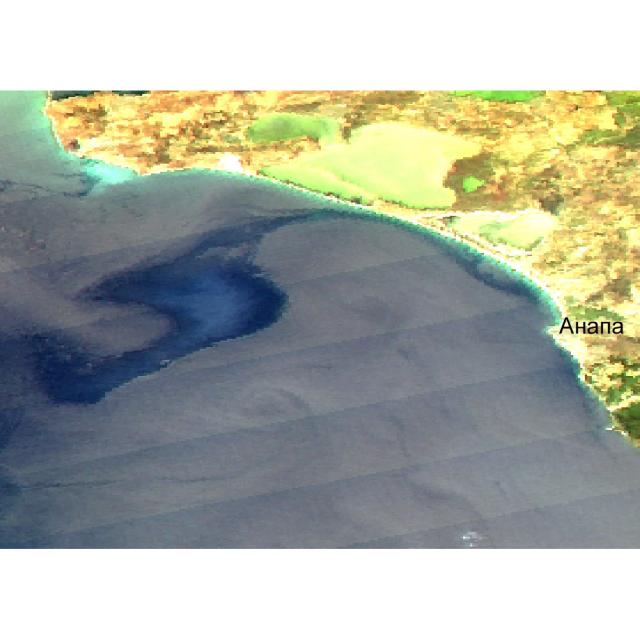
Oil Spill in the Black Sea Seen From Space On the morning of 29 August 2025, while loading oil onto the Turkish tanker T. Semahat at the CPC (Caspian Pipeline Consortium) marine terminal, a hose ruptured and oil spilled into the sea. Specialists from IKI and the P. P. Shirshov Institute of Oceanology of the RAS monitor the area of the accident using the capabilities of the IKI-Monitoring Centre For Collective Use.
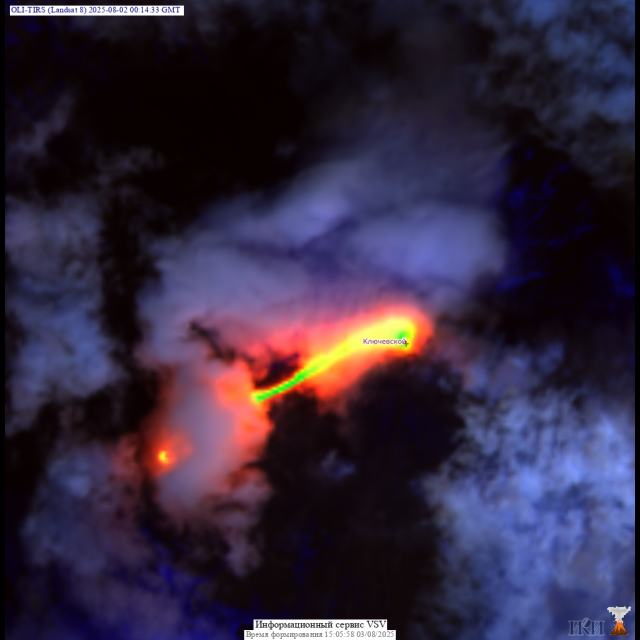
Volcanoes' Eruptions In July And August 2025 Seen From Space Two volcanoes on Kamchatka peninsula began erupting. On 30 July 2025 the Kluychevskoy volcano, and on 2 August the Krasheninnikov volcano — which had been dormant for more than 500 years. Scientists monitor these events, using among other methods the VolSatView monitoring system.
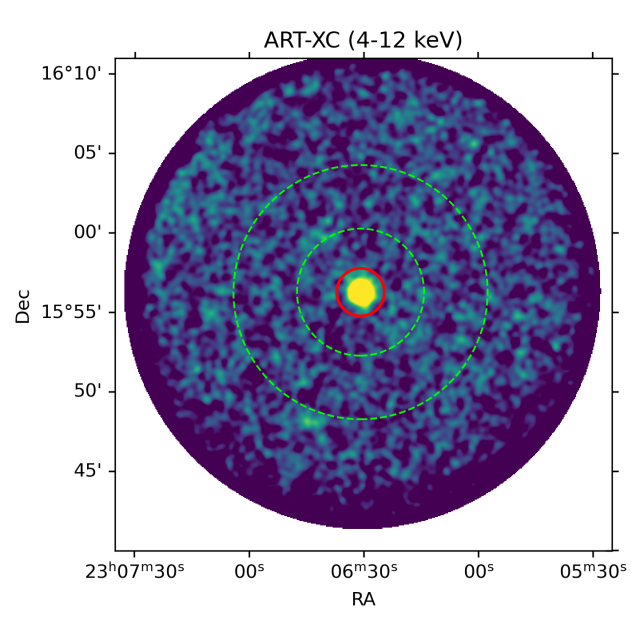
Powerful Quasar Uncovered by Mikhail Pavlinsky ART-XC Telescope During its all-sky survey, Mikhail Pavlinsly ART-XC telescope aboard the Spektr-RG observatory discovered a previously unknown X-ray source, SRGA J230631.0+155633. Further studies revealed that this is one of the most powerful and interesting quasars that have existed in the Universe over the past five billion years.
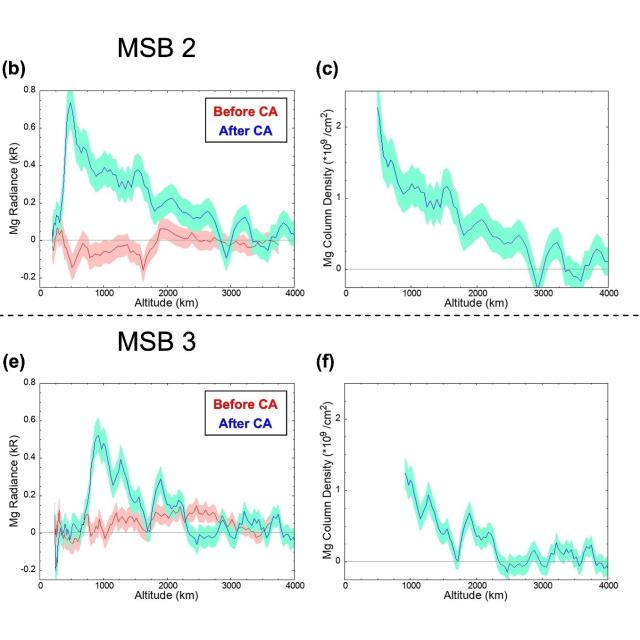
Waiting for Mercury The exosphere of Mercury has little magnesium and contains helium. Some details about its structure are currently being revealed by the PHEBUS instrument aboard the BepiColombo interplanetary mission — an ultraviolet spectrometer developed with IKI participation. PHEBUS observed Mercury during several flybys and is now preparing to operate in scientific orbit, which it is to entere at the end of 2026. Papers on these preliminary results were published in the Journal of Geophysical Research: Planets.
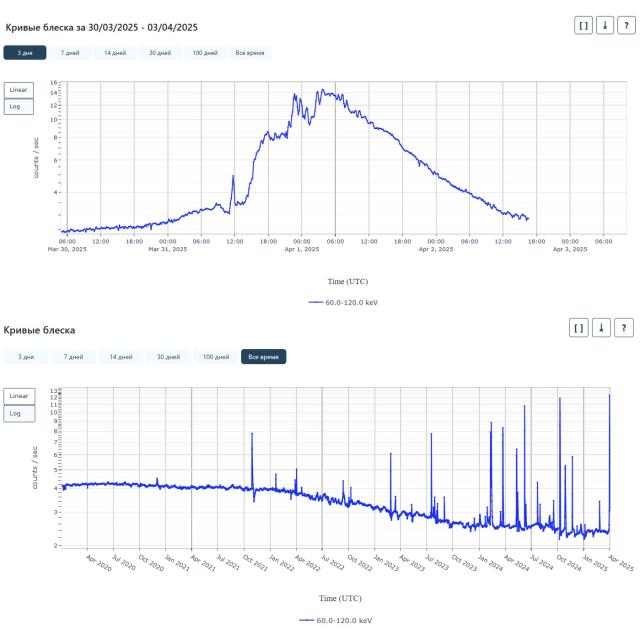
Mikhail Pavlinsky ART-XC Telescope Detected Solar Cosmic Rays Rise On April 1 It was not a joke: on the first day of the month the number of energetic solar protons near the Lagrange point L2 increased significantly to around 14 counts per second. This was almost 7 times higher than usual background, registered by ART-XC detectors, and the most prominent rise in 5 years of monitoring Sun's activity.
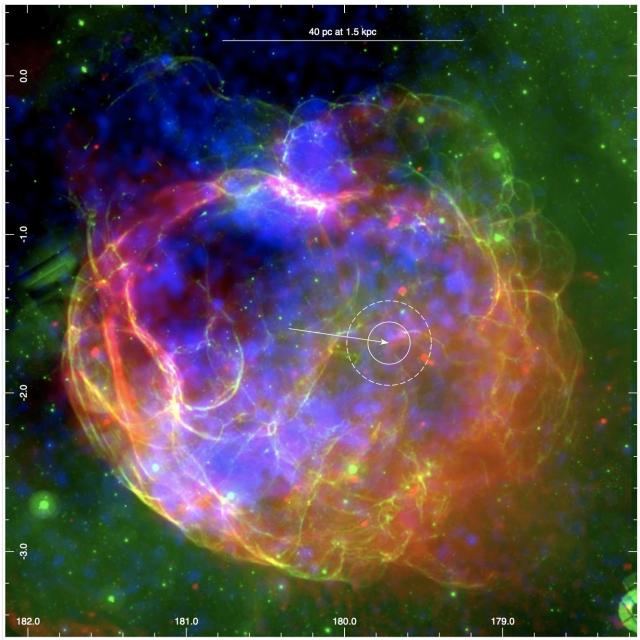
The Most Splendiferous Supernova Remnant In the Galaxy The team of astrophysicists from IKI and other organizations used X-ray data collected by SRG/eROSITA telescope onboard Spektr-RG observatory to look into the hot interior of the S147/Spaghetti nebula and explain its unusual properties.
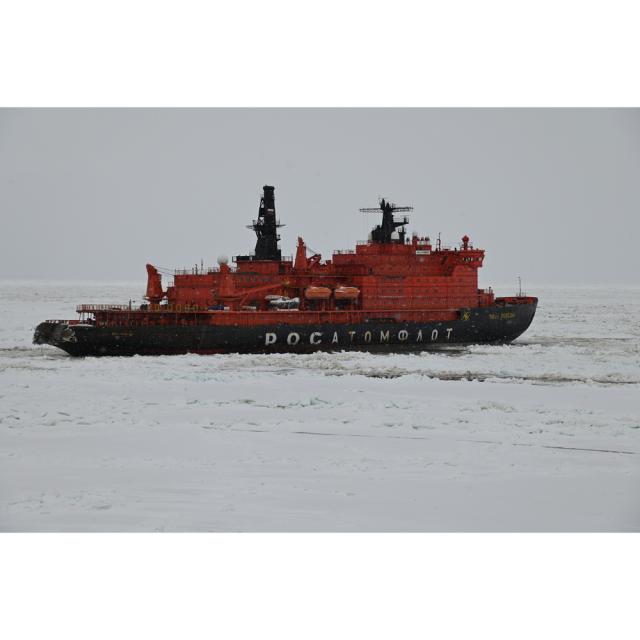
Icebreakers And Satellites Work Together In Arctic 28th February in Russia is Arctic Day. Satellite remote sensing data are crucial for those, who study and work here. IKI scientists develop special algorithms for satellite microwave radiometry and run subsatellite experiments to refine the models, which are used for data processing. Results of such experiment, organized together with Arctic and Antarctic Research Institute and Atomflot, are already included in the database of IKI-Monitoring center of collective use.