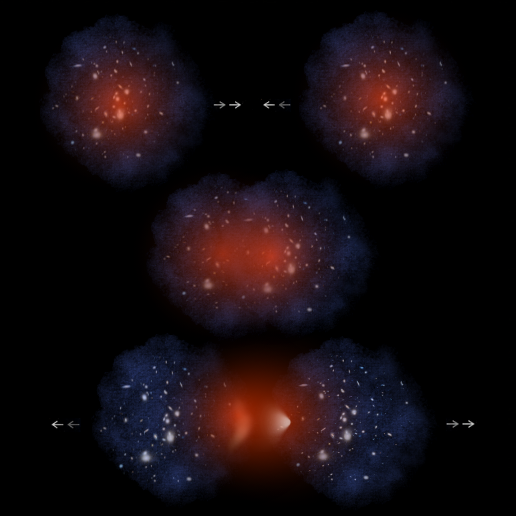
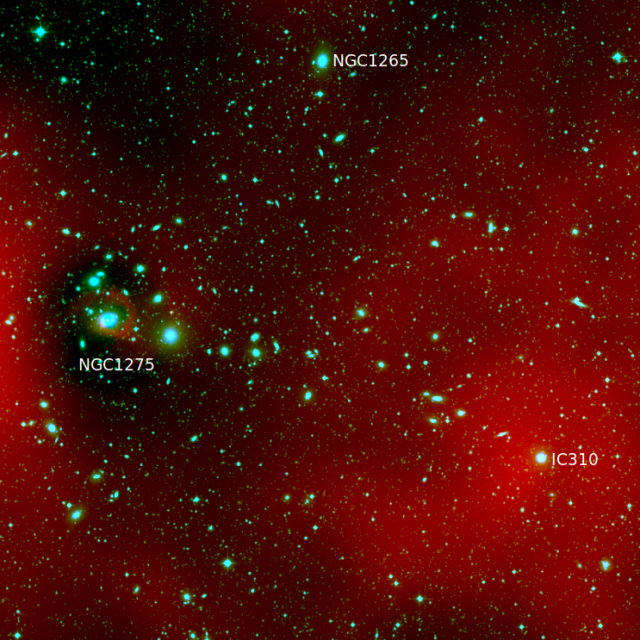
Five Billion Years Of the Brightest Galaxy Cluster's Life Astrophysicists analyzed the data from three X-ray observatories to get the most detailed map of Perseus cluster.
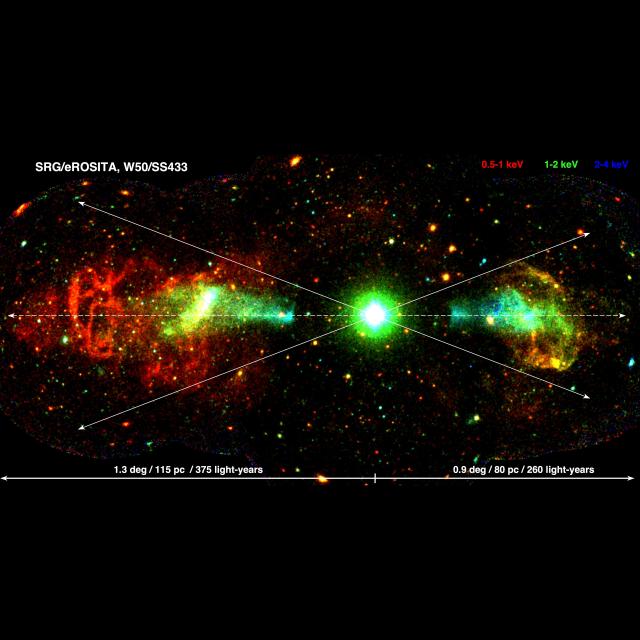
X-Ray Panorama of W50 'Manatee' Nebula Through the 'Eyes' of SRG/eROSITA Telescope Scientists from Russian consortium of SRG/eROSITA telescope carried out the most detailed study of W50 nebula with SS433 binary system. The paper presenting the results of the study was published in Astronomy&Astrophysics.
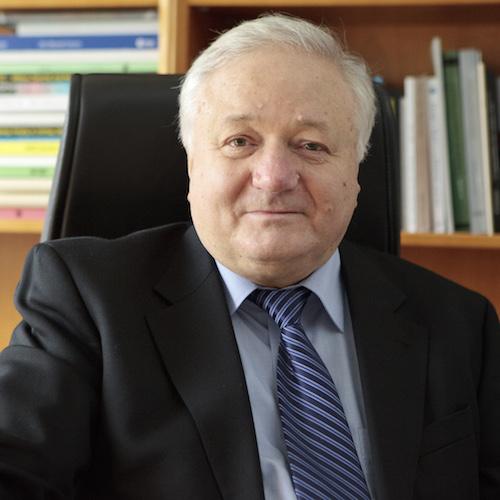
2026 Fritz Zwicky Prize for Astrophysics & Cosmology Awarded to Prof. Academician Rashid Sunyaev The European Astronomical Society and Frits Zwicky Foundation awarded the 2026 Fritz Zwicky Prize for Astrophysics & Cosmology to Prof. Academician Rashid Sunyaev for his pioneering work on the cosmic microwave background and the theory of disk accretion.
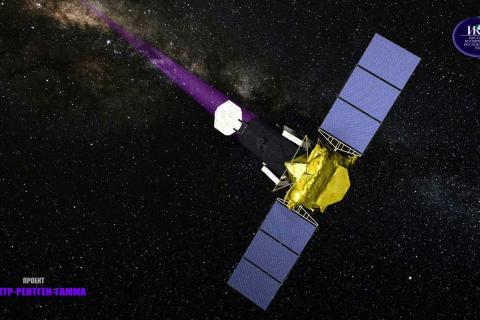
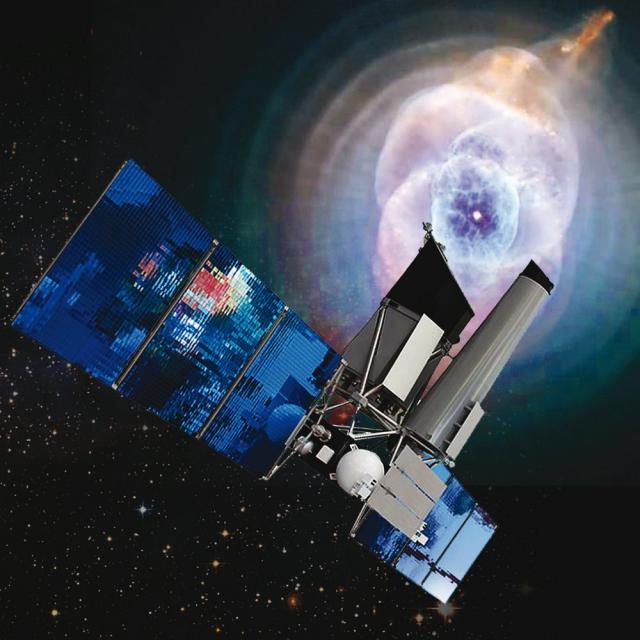
Spektr-RG Completed Nominal Mission January 13, 2026 Spektr-RG observatory marked 6.5 years since the day of its launch, which is also its guaranteed operational time. Today the observatory has successfully completed its nominal mission and continues studying the Universe in hard X-ray range.
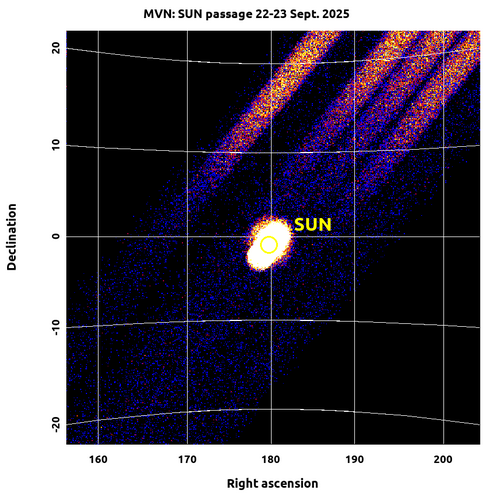
Observations Of the Sun In the MVN Experiment As today, October 10, World Space Week comes to an end, we congratulate everyone on the beginning of the space era and publish an image by the SPIN-X1-MVN X-ray monitor, which has been operating aboard the International Space Station since February 2025.
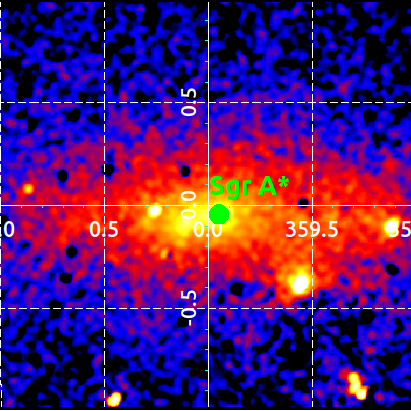
Galactic Centre In X-Rays Mikhail Pavlinsly ART-XC X-ray telescope studies the properties of the nuclear stellar disc of the Milky Way.
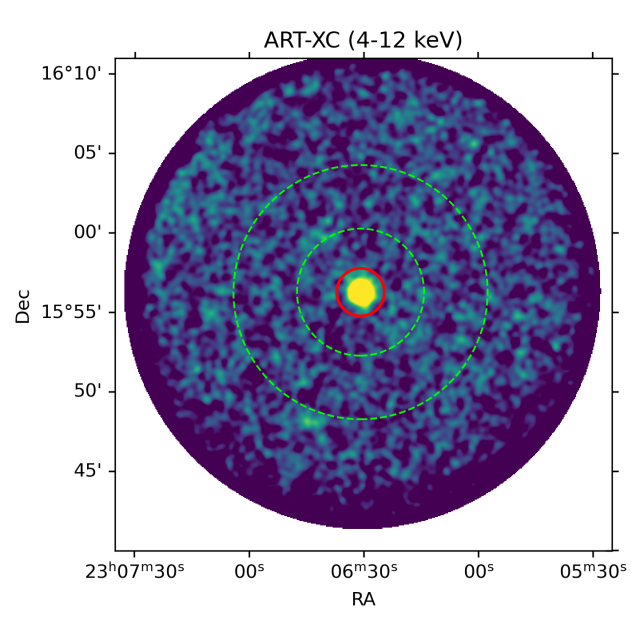
Powerful Quasar Uncovered by Mikhail Pavlinsky ART-XC Telescope During its all-sky survey, Mikhail Pavlinsly ART-XC telescope aboard the Spektr-RG observatory discovered a previously unknown X-ray source, SRGA J230631.0+155633. Further studies revealed that this is one of the most powerful and interesting quasars that have existed in the Universe over the past five billion years.
INTEGRAL's Final Light After 22.5 years of successful operation ESA's INTEGRAL international orbital observatory, launched in 2002 by Russia, completed its scientific mission.