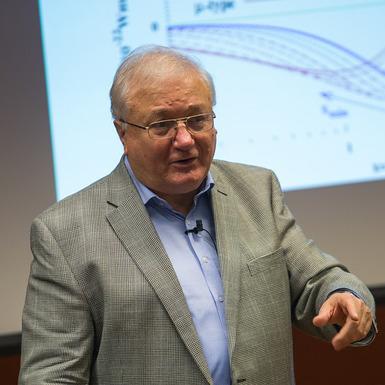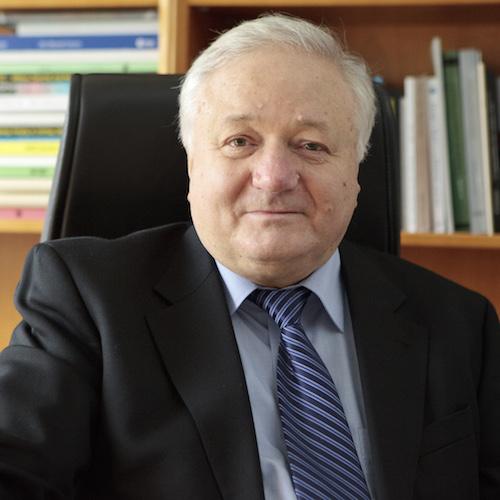
Academician Rashid Sunyaev: Fifty Years At IKI On June 17, 2024 Academician Dr. Rashid Sunyaev celebrated the 50th year of his work at Space Research Institute.
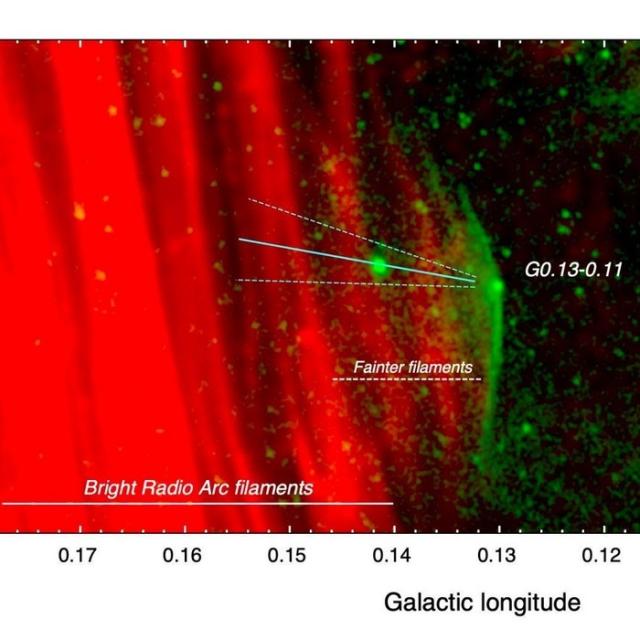
Pulsar Nebulas And Filaments In the Galactic Centre Galactic Center teems with the most extremal and exotic objects. Among them are so-called filaments — long and thin structures. Some of them are visible in radio, the other — in X-rays. They are supposed to appear as a result of relativistic electrons' and positrons' synchrotron radiation. These particles are born near pulsars — rotating neutron stars with strong magtic fields. New observations support this hypothesis.
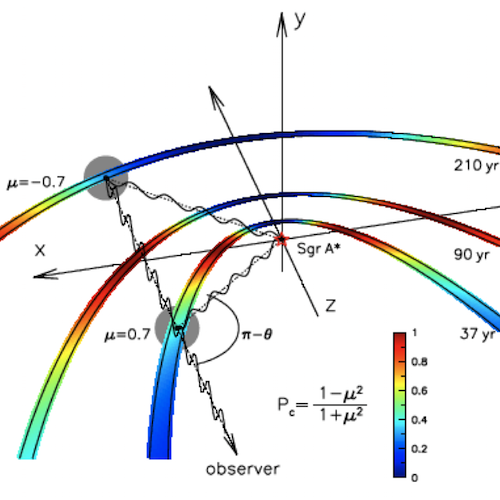
IXPE Finds Polarization of the X-ray Emission From Molecular Clouds in the Milky Way's Centre This finding confirms the hypothesis that the supermassive black hole in the center of our Galaxy once had been much more active that it is now. The results are published in the Nature journal.
Academician Rashid Sunyaev is 80! On 1 March 2023 Academician Rashid A. Sunyaev, one of the world renowned astrophysicists, celebrates its 80th birthday. He is famous for many results, which have entered modern textbooks for theoretical astrophysics and cosmology all over the world.
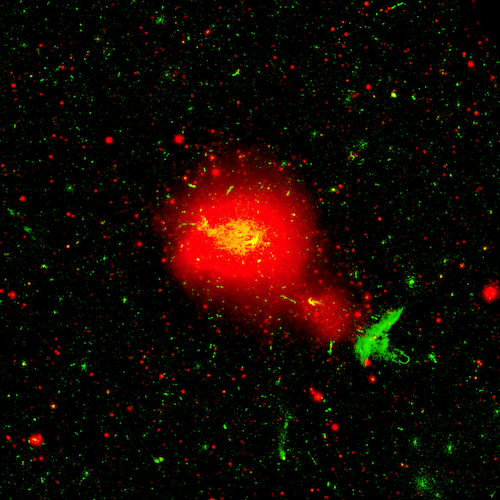
Coma Cluster in X-Rays and Radio Astrophysicists from IKI and Ioffe Institute, using the data from SRG/eROSITA space telescope, studied the properties of a shock in Coma cluster of galaxies. The paper summarising their results was accepted for publication in Astronomy&Astrophysics.
Academician Rashid Sunyaev Awarded Max Planck Medal Academician Rashid Sunyaev was awarded the Max Planck Medal, the highest prize in theoretical physics granted by the German Physical Society (DPG), in recognition of “numerous and fundamental contributions to relativistic astrophysics and cosmology.”
State awards to IKI's scientists The official ceremony took place at Ministry of Science and Higher Education of Russia, led by the Minister Valery Falkov.
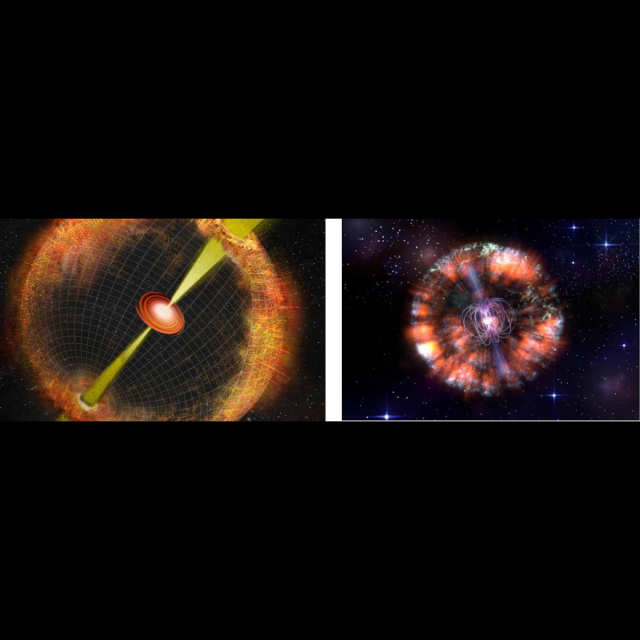
SRG/eRosita finds X-ray emission of the most luminous "cow" in the sky At first AT2020mrf seemed to be an ordinary optical transient, but thanks to SRG/eROSITA discovery of a new X-ray source in the same place it became clear that the astrophysicists have encountered the most peculiar object.