Breadcrumb Home News and Events News and Events (in Russian for the time being) - Any -EventsResearchMission StatusAwardsEducationPopular scienceSave The DateIn Memoriam Mikhail Pavlinsky ART-XC Team Publishes New Catalogue of X-Ray Sources Detected During the First Five All-Sky Surveys The new catalogue includes more than one and a half thousand objects. Mikhail Pavlinsky ART-XC telescope is one of the two instruments aboard Russian Spektr-RG space observatory, currently working in L2 point. Mikhail Pavlinsky ART-XC Telescope Discovers X-Ray Emission of SN2024ggi Supernova SN2024ggi, a II-type supernova, was first found on April 11, 2024 by ATLAS project team. It sits in a nearby galaxy NGC3621. Mikhail Pavlinsky ART-XC telescope onboard Spektr-RG observatory was the first to register its X-ray emission. New Millisecond X-Ray Pulsar Sounds La As Heard By Mikhail Pavlinsky ART-XC Telescope After the first few days of observations a new X-ray source turned out to be a pulsar in a binary system with a low-mass companion. X-ray Variability of Quasars Based On SRG/eROSITA All-Sky Survey Data from 2-year sky survey by SRG/eROSITA were used to study X-ray variability of thousands of SDSS quasars. X-ray variability appeared to be linked with some physical parameters of supermassive black holes, such as theirs masses and accretion rates. Forest Fires in the North Throughout Twenty Years Using 20-year-long archival data, researchers at IKI Earth Remote Sensing Technologies Department made a map, showing losses from forest fires in the North in the beginning of the 21st century, Study Mount Etna To Understand Idunn Mons International team of scientists suggests a comprehensive research program for Etna, which can contribute to future missions to Venus, targeting at recent volcanism on the planet. New Algorithms For Earth Remote Sensing Data Of MTVZYa Instrument Scientists from IKI Earth Research From Space Department develop new algorithms for microwave radiometer data onboard the spacecraft of Meteor-M series. These results are alrady being integrated into VEGA-Science information system. Energetic Electrons Cool The Solar System When Voyagers left the Solar System in 2010's, they discovered that the inner heliosheath is significantly thinner than predicted. Now, the 3D MHD-modelling run by IKI scientists showed that the fact can be explained, if we consider the effect of hot electrons and their thermal conductivity. Their results were published in MNRAS and are available on arXiv.org. Neural Network Studies Mural Paintings IKI researchers together with art experts from Kirillo-Belozersky Museum explore the possibilities to restore ancient masterpieces using artificial neural networks. Clouds In Focus A new technique to estimate the size of particles in polar stratospheric and noctlilucent clouds was suggested by Oleg Ugolnikov, senior researchers at IKI. With the accuracy comparable to that of lidars and satellites, this method involves much simpler equipment, such as off-the-shelf RGB-cameras. Studies of these atmospheric phenomena are crucial to understand climate changes. Pagination First page « Previous page ‹ … Page 2 Page 3 Current page 4 Page 5 Page 6 … Next page › Last page » IKI in Media Weekly Digests (in Russian) 04.12.2023 — 11.12.2023 December 11, 2023 27.11.2023 — 04.12.2023 December 4, 2023 20.11.2023 — 27.11.2023 November 27, 2023 13.11.2023 — 20.11.2023 November 20, 2023 Pagination First page « Previous page ‹ … Page 23 Page 24 Page 25 Page 26 Current page 27 Page 28 Page 29 Page 30 Page 31 … Next page › Last page » News by tags Conferences High-Energy Astrophysics Today and Tomorrow 2025 (HEA-2025) December 22—25, 2025 Registration and abstract submission deadline: November 10, 2025 21st annual conference Plasma Physics in the Solar System February 9–13, 2026 Registration till December 23, 2025, thesis submission till January 12, 2026 23rd international conference Modern Problems of the Earth Remote Sensing November 10–14, 2025 Abstract submission closed. Registration deadline November 3, 2025. IKI Media Service website (archive, in Russian)
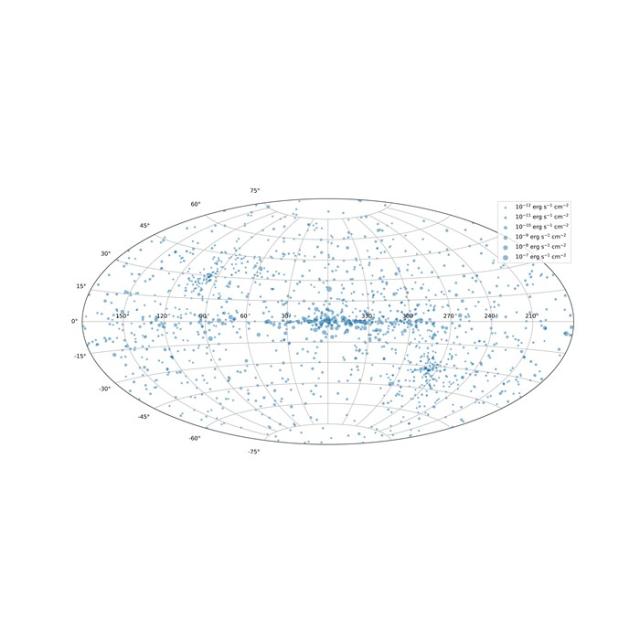
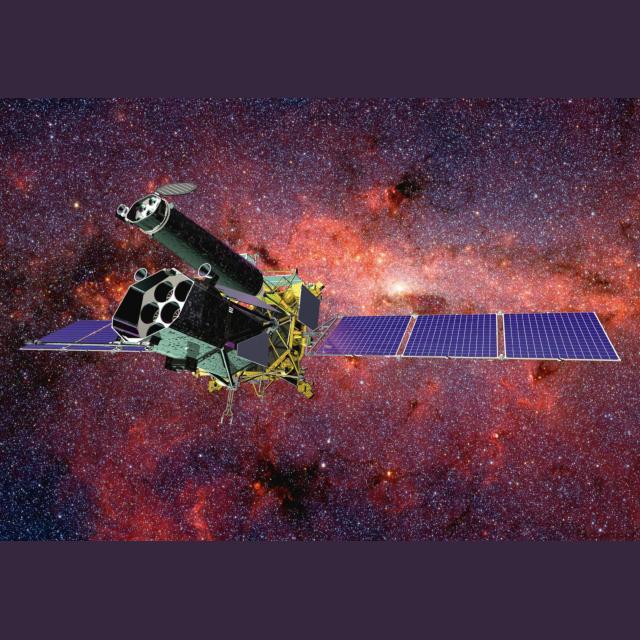
Mikhail Pavlinsky ART-XC Team Publishes New Catalogue of X-Ray Sources Detected During the First Five All-Sky Surveys The new catalogue includes more than one and a half thousand objects. Mikhail Pavlinsky ART-XC telescope is one of the two instruments aboard Russian Spektr-RG space observatory, currently working in L2 point.
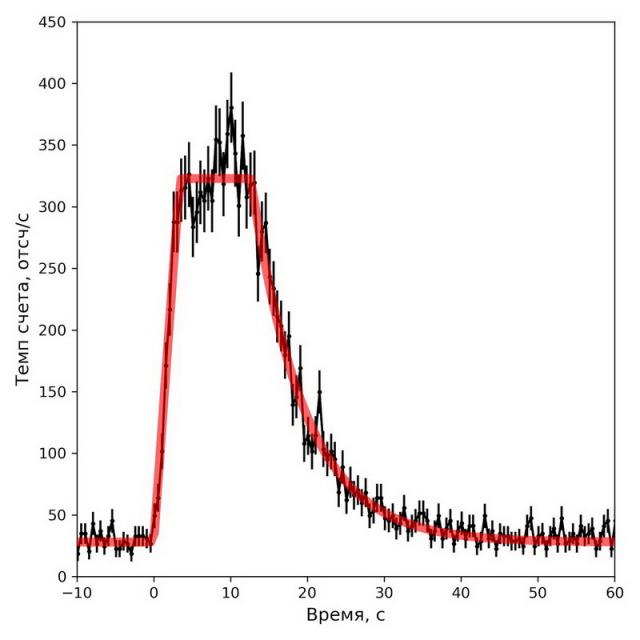
Mikhail Pavlinsky ART-XC Telescope Discovers X-Ray Emission of SN2024ggi Supernova SN2024ggi, a II-type supernova, was first found on April 11, 2024 by ATLAS project team. It sits in a nearby galaxy NGC3621. Mikhail Pavlinsky ART-XC telescope onboard Spektr-RG observatory was the first to register its X-ray emission.
New Millisecond X-Ray Pulsar Sounds La As Heard By Mikhail Pavlinsky ART-XC Telescope After the first few days of observations a new X-ray source turned out to be a pulsar in a binary system with a low-mass companion.
X-ray Variability of Quasars Based On SRG/eROSITA All-Sky Survey Data from 2-year sky survey by SRG/eROSITA were used to study X-ray variability of thousands of SDSS quasars. X-ray variability appeared to be linked with some physical parameters of supermassive black holes, such as theirs masses and accretion rates.
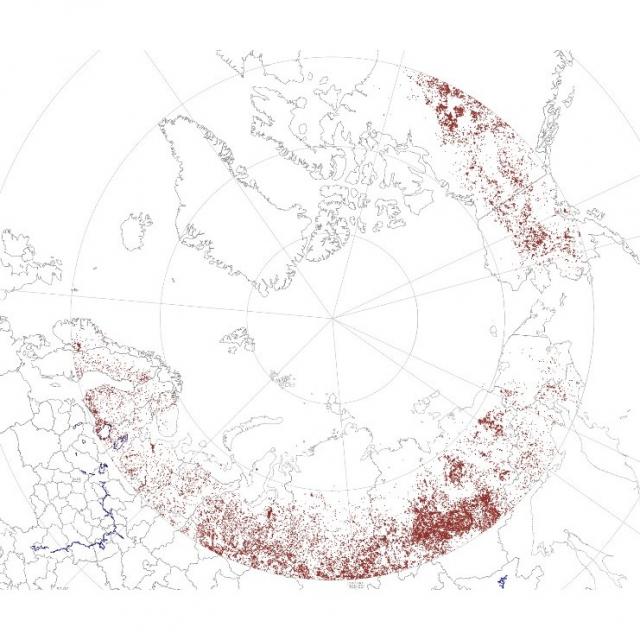
Forest Fires in the North Throughout Twenty Years Using 20-year-long archival data, researchers at IKI Earth Remote Sensing Technologies Department made a map, showing losses from forest fires in the North in the beginning of the 21st century,
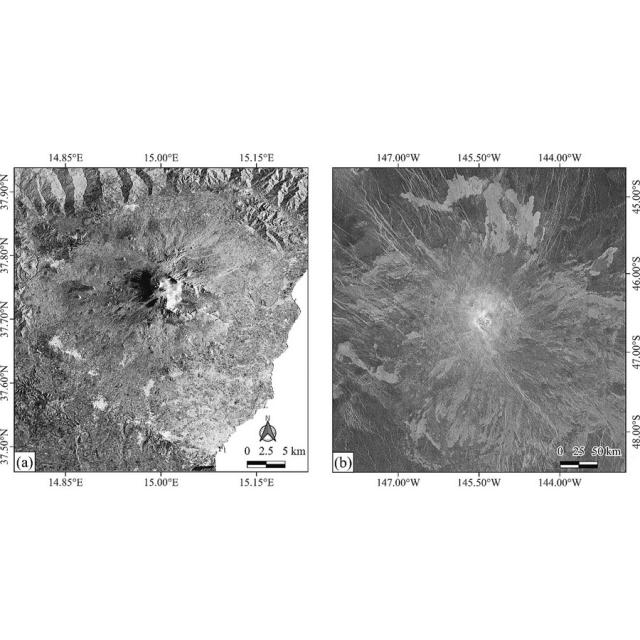
Study Mount Etna To Understand Idunn Mons International team of scientists suggests a comprehensive research program for Etna, which can contribute to future missions to Venus, targeting at recent volcanism on the planet.
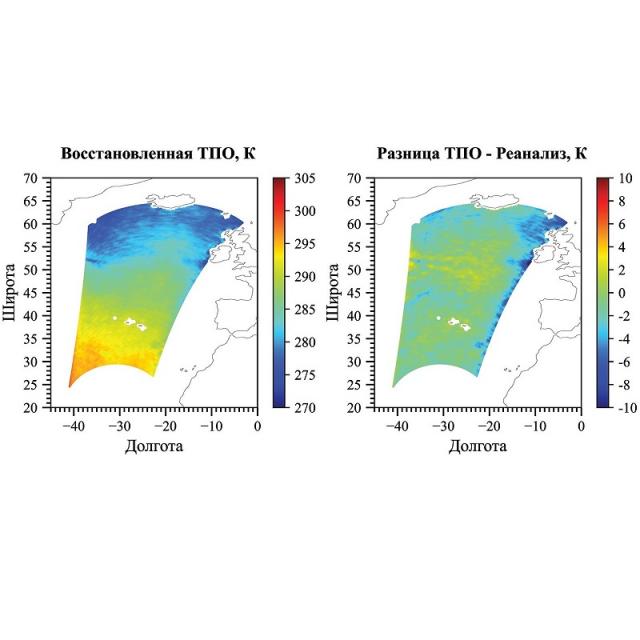
New Algorithms For Earth Remote Sensing Data Of MTVZYa Instrument Scientists from IKI Earth Research From Space Department develop new algorithms for microwave radiometer data onboard the spacecraft of Meteor-M series. These results are alrady being integrated into VEGA-Science information system.
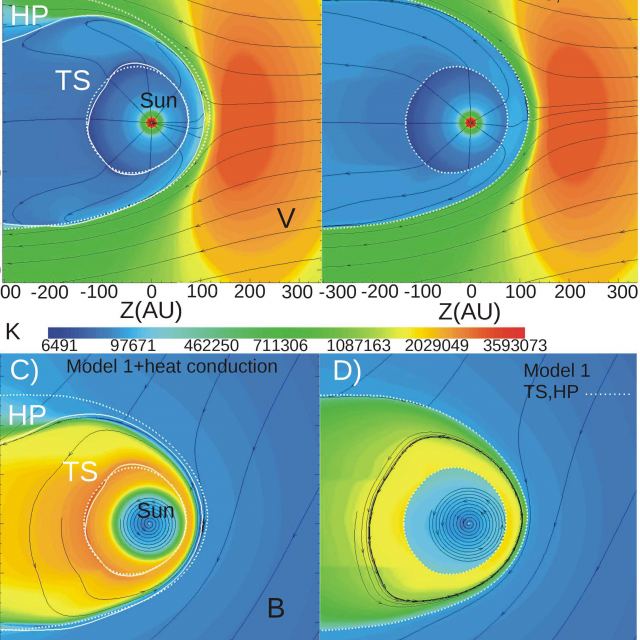
Energetic Electrons Cool The Solar System When Voyagers left the Solar System in 2010's, they discovered that the inner heliosheath is significantly thinner than predicted. Now, the 3D MHD-modelling run by IKI scientists showed that the fact can be explained, if we consider the effect of hot electrons and their thermal conductivity. Their results were published in MNRAS and are available on arXiv.org.
Neural Network Studies Mural Paintings IKI researchers together with art experts from Kirillo-Belozersky Museum explore the possibilities to restore ancient masterpieces using artificial neural networks.
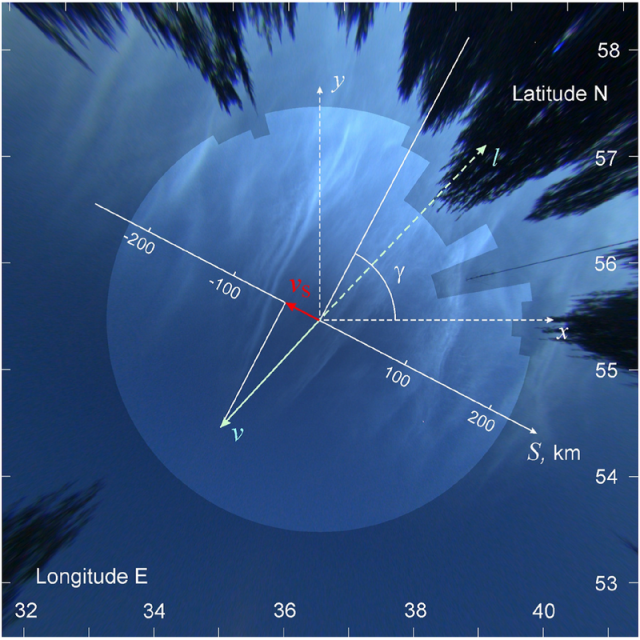
Clouds In Focus A new technique to estimate the size of particles in polar stratospheric and noctlilucent clouds was suggested by Oleg Ugolnikov, senior researchers at IKI. With the accuracy comparable to that of lidars and satellites, this method involves much simpler equipment, such as off-the-shelf RGB-cameras. Studies of these atmospheric phenomena are crucial to understand climate changes.