Breadcrumb Home News and Events News and Events (in Russian for the time being) - Any -EventsResearchMission StatusAwardsEducationPopular scienceSave The DateIn Memoriam Hydrochloric Acid To Be Found In Martian "Ice Holes" Having measured HCl and water ice abundance in Martian atmosphere with the ACS spectrometer onboard TGO mission, scientists showed that it is HCl uptake onto water ice cloud particles that can swiftly reduce the content of HCl in the atmosphere. Small Interstellar Dust Does Not Stop At the Threshold Of the Solar System Plasma parameters on the borders of the heliosphere help small interstellar dust particles permeate deep into Solar system, according to a new model developed by IKI researchers Egor Godenko and Vladislav Izmodenov. This also suggest that we can study the properties of interstellar matter by measuring its characteristics in our closest neighbourhood. Anisotropic Stellar Wind In the Most Reknown Microquasar In Milky Way New model developed by IKI scientists and their colleagues from Ioffe Institute sheds new light on the origin of W50 giant radio nebula, which hides the most reknown X-ray object of our Galaxy – SS433 microquasar. BTN-M1 Resumes GRBs Monitoring Onboard Russian Segment of the ISS On August 8, 2024 BTN-M1 instrument onboad Russian segment of the ISS resumed gamma-ray bursts (GRBs) monitoring together with Russian neutron spectrometer HEND (onboard NASA's Mars Odyssey mission). Just the day after they detected new GRB240809A from hypernova at a distance z ~ 1.5. Martian Atmosphere Waves Using data from ACS spectrometer onboard TGO spacecraft, IKI scientist Ekaterina Starichenko and her colleagues studied gravity waves in Martian atmosphere, from the surface to the 160-km height, and the effect, which seasonal changes and dust storms have upon them. Results were published in the Astronomy&Astrophysics. New Lava Dome Born On the Slope Of Sheveluch Volcano, Named '300 Years Of the RAS' Scientists from Institute of Volcanology and Seismology, Computing Center of the RAS Far-Eastern Branch, IKI and Planeta Center For Space Hydrometeorology made the discovery, using satellite data and VolSatView infromation system. By the early June, 2024 the dome was already 100 meter high. Sun Hits Mars On 20th May 2024 IKI instuments, working near the Red Planet, caught it and stayed safe. Pulsar Nebulas And Filaments In the Galactic Centre Galactic Center teems with the most extremal and exotic objects. Among them are so-called filaments — long and thin structures. Some of them are visible in radio, the other — in X-rays. They are supposed to appear as a result of relativistic electrons' and positrons' synchrotron radiation. These particles are born near pulsars — rotating neutron stars with strong magtic fields. New observations support this hypothesis. Into the Arctic With Three Ships IKI researchers and their collegues carried special obervations of ice cover in the Arctic. Mediaeval Watermarks Revealed With Multispectral Imaging Joint project of State Historical Museum and Space Research Institute sheds light on the origin of old manuscripts. Pagination First page « Previous page ‹ Page 1 Page 2 Current page 3 Page 4 Page 5 … Next page › Last page » IKI in Media Weekly Digests (in Russian) 11.08.2025 — 18.08.2025 August 18, 2025 05.08.2025 —11.08.2025 August 11, 2025 28.07.2025 — 03.08.2025 August 4, 2025 21.07.2025 — 27.07.2025 July 28, 2025 Pagination First page « Previous page ‹ Page 1 Page 2 Page 3 Page 4 Current page 5 Page 6 Page 7 Page 8 Page 9 … Next page › Last page » News by tags Conferences High-Energy Astrophysics Today and Tomorrow 2025 (HEA-2025) December 22—25, 2025 Registration and abstract submission deadline: November 10, 2025 21st annual conference Plasma Physics in the Solar System February 9–13, 2026 Registration till December 23, 2025, thesis submission till January 12, 2026 23rd international conference Modern Problems of the Earth Remote Sensing November 10–14, 2025 Abstract submission closed. Registration deadline November 3, 2025. IKI Media Service website (archive, in Russian)
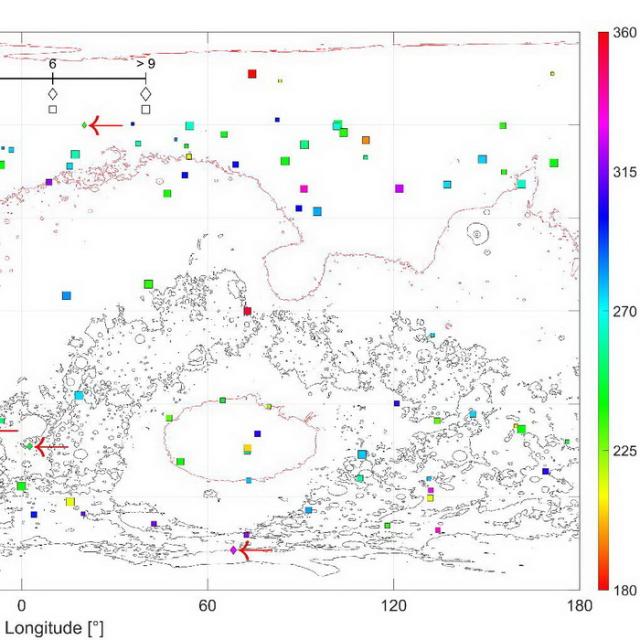
Hydrochloric Acid To Be Found In Martian "Ice Holes" Having measured HCl and water ice abundance in Martian atmosphere with the ACS spectrometer onboard TGO mission, scientists showed that it is HCl uptake onto water ice cloud particles that can swiftly reduce the content of HCl in the atmosphere.
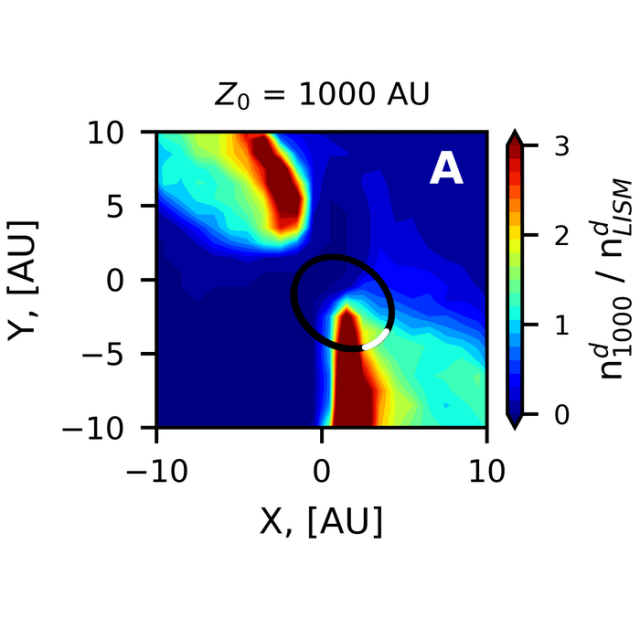
Small Interstellar Dust Does Not Stop At the Threshold Of the Solar System Plasma parameters on the borders of the heliosphere help small interstellar dust particles permeate deep into Solar system, according to a new model developed by IKI researchers Egor Godenko and Vladislav Izmodenov. This also suggest that we can study the properties of interstellar matter by measuring its characteristics in our closest neighbourhood.
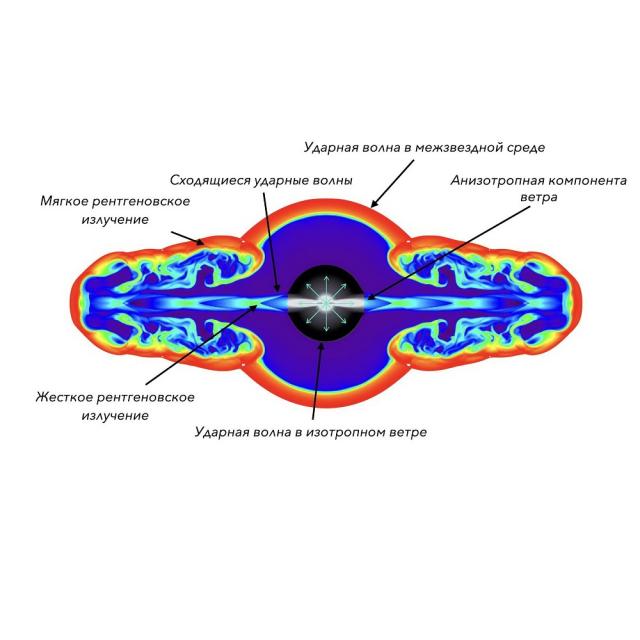
Anisotropic Stellar Wind In the Most Reknown Microquasar In Milky Way New model developed by IKI scientists and their colleagues from Ioffe Institute sheds new light on the origin of W50 giant radio nebula, which hides the most reknown X-ray object of our Galaxy – SS433 microquasar.
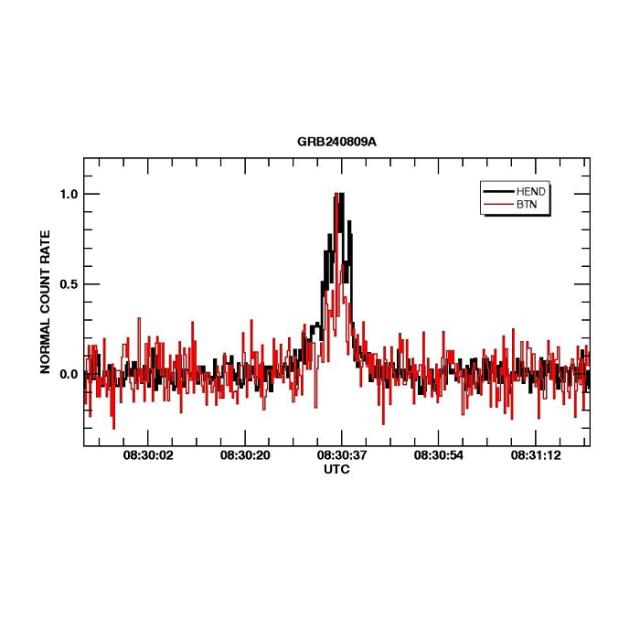
BTN-M1 Resumes GRBs Monitoring Onboard Russian Segment of the ISS On August 8, 2024 BTN-M1 instrument onboad Russian segment of the ISS resumed gamma-ray bursts (GRBs) monitoring together with Russian neutron spectrometer HEND (onboard NASA's Mars Odyssey mission). Just the day after they detected new GRB240809A from hypernova at a distance z ~ 1.5.
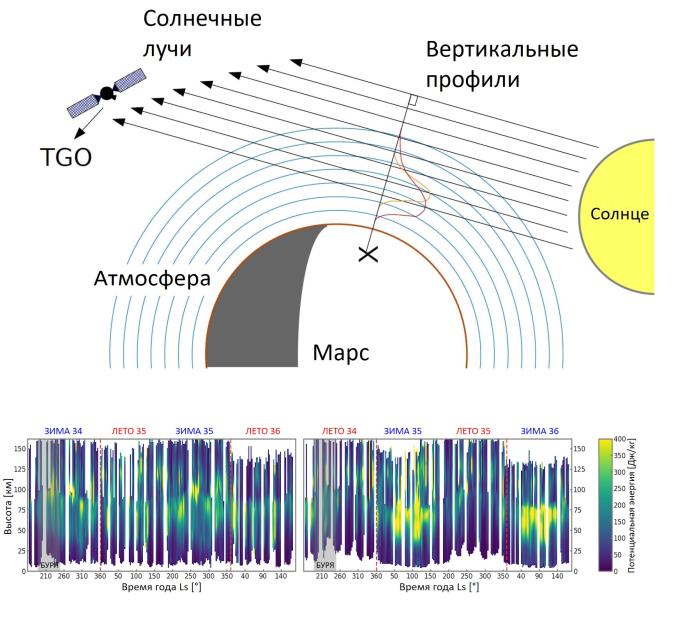
Martian Atmosphere Waves Using data from ACS spectrometer onboard TGO spacecraft, IKI scientist Ekaterina Starichenko and her colleagues studied gravity waves in Martian atmosphere, from the surface to the 160-km height, and the effect, which seasonal changes and dust storms have upon them. Results were published in the Astronomy&Astrophysics.
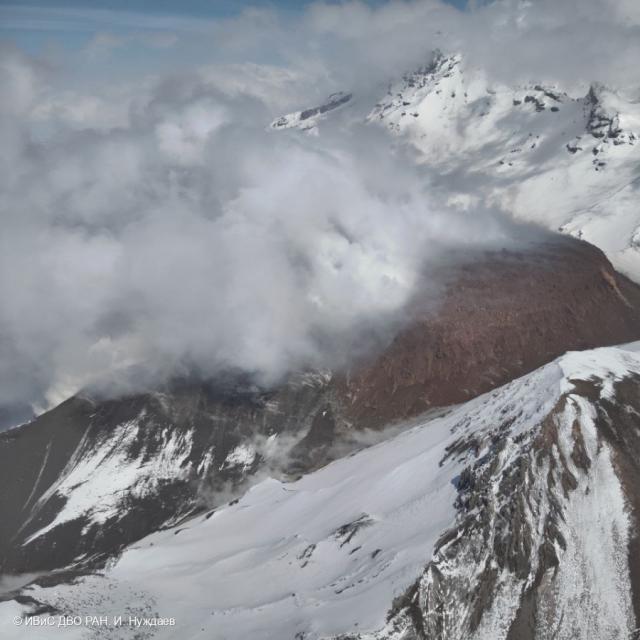
New Lava Dome Born On the Slope Of Sheveluch Volcano, Named '300 Years Of the RAS' Scientists from Institute of Volcanology and Seismology, Computing Center of the RAS Far-Eastern Branch, IKI and Planeta Center For Space Hydrometeorology made the discovery, using satellite data and VolSatView infromation system. By the early June, 2024 the dome was already 100 meter high.
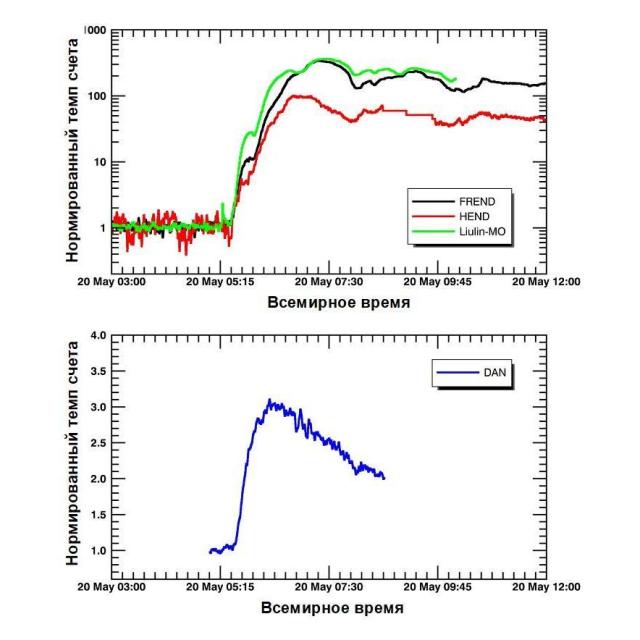
Sun Hits Mars On 20th May 2024 IKI instuments, working near the Red Planet, caught it and stayed safe.
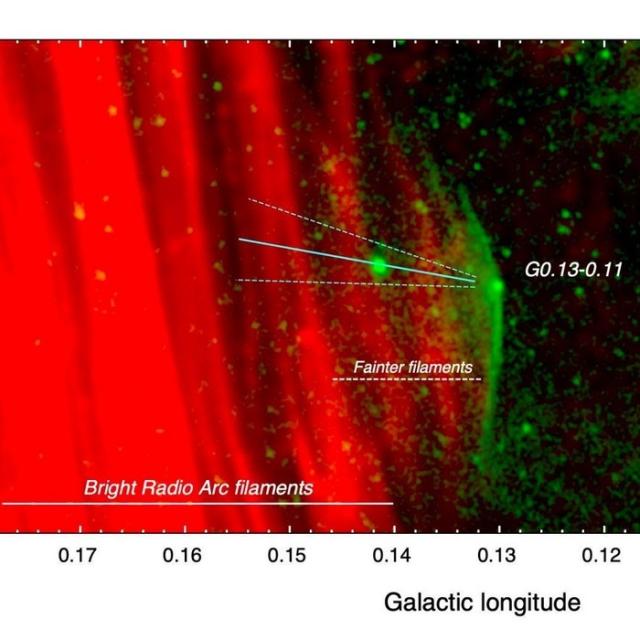
Pulsar Nebulas And Filaments In the Galactic Centre Galactic Center teems with the most extremal and exotic objects. Among them are so-called filaments — long and thin structures. Some of them are visible in radio, the other — in X-rays. They are supposed to appear as a result of relativistic electrons' and positrons' synchrotron radiation. These particles are born near pulsars — rotating neutron stars with strong magtic fields. New observations support this hypothesis.
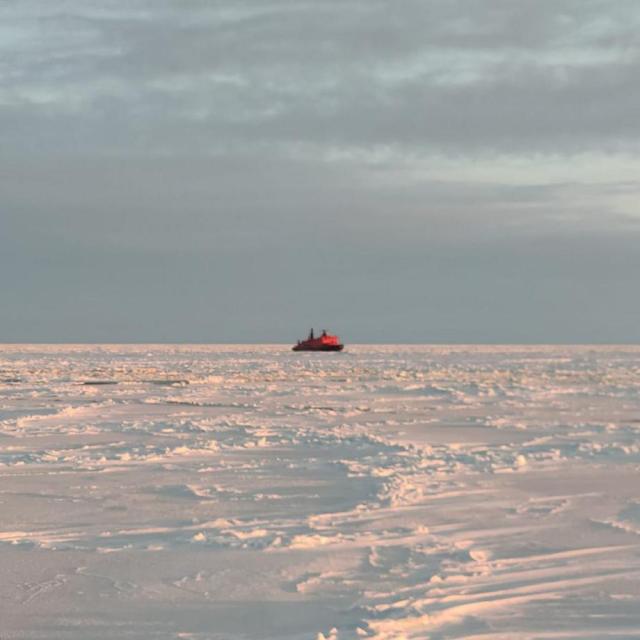
Into the Arctic With Three Ships IKI researchers and their collegues carried special obervations of ice cover in the Arctic.
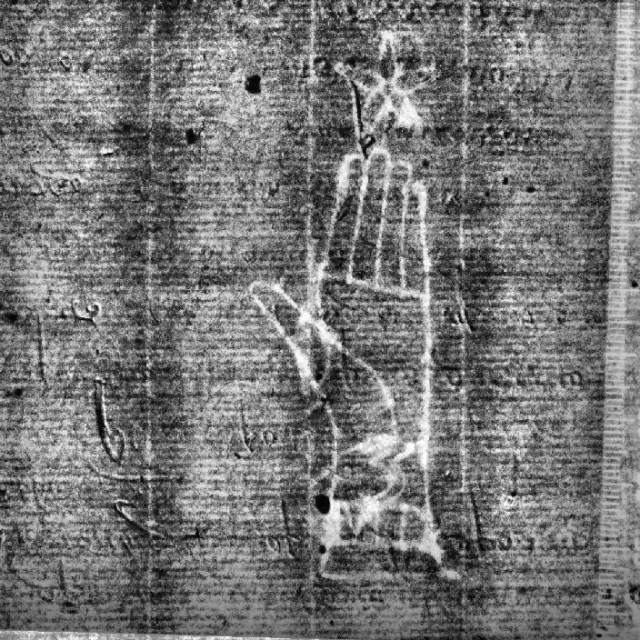
Mediaeval Watermarks Revealed With Multispectral Imaging Joint project of State Historical Museum and Space Research Institute sheds light on the origin of old manuscripts.