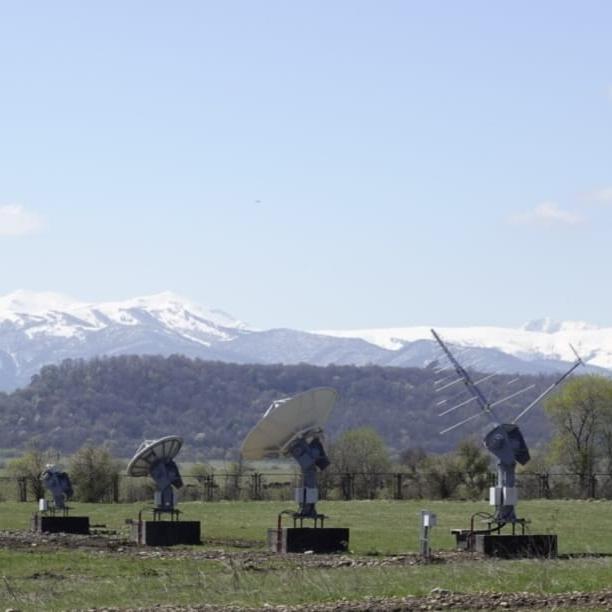
Intense Solar Proton Flares Observed With New Multi-Frequency Solar Radio Spectropolarimeter Solar Radio Spectropolarimeter, aka SRSP, in the Northern Caucausus, commissioned in March 2025, carried a series of observations of intense X-class solar flares in November 2025. Preliminary results of the study were presented at the 21st conference "Plasma Physics in Solar System".
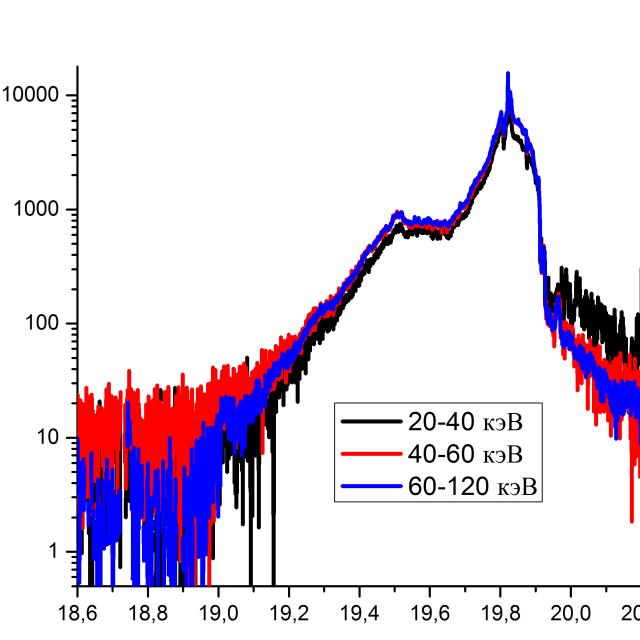
The Sun Sent to Earth Many Protons, But Not Very Energetic Strange events occurred near the Earth after solar flare X1.9 on 18 January 2026. That were the arrival of coronal mass ejection on 19 January, followed by record flux of solar protons and geomagnetic storm on 19–21 January. Mikhail Pavlinsky ART-XC telescope aboard Spektr-RG observatory studied the solar flare and the proton event in the vicinity of L2 Lagrange point.
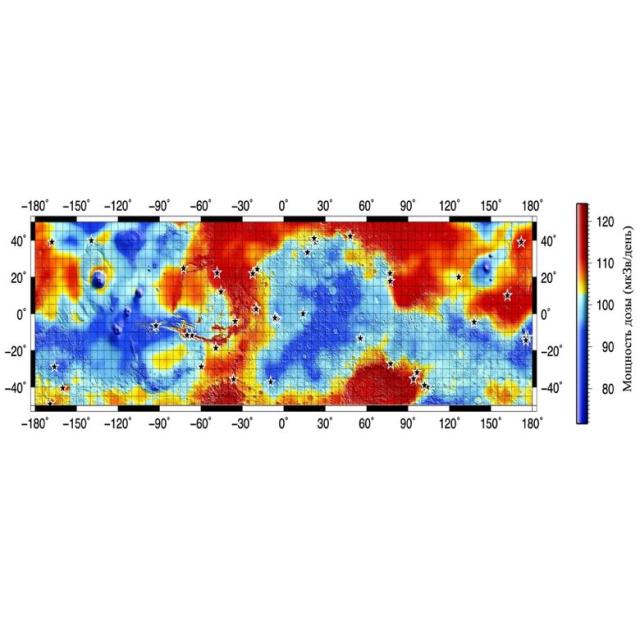
Neutron Component of the Radiation Background On the Surfaces of Mars And the Moon Under Quiet Sun Conditions And During Intense Solar Proton Events Numerical modeling of the neutron albedo of the Moon and Mars and analysis of experimental data from the Russian instruments HEND, LEND, DAN, and FREND made it possible to study the behavior of the neutron component of the radiation background on the surfaces of these celestial bodies under quiet Sun conditions and during intense solar events. These results are important for assessing radiation risks for future manned space missions.
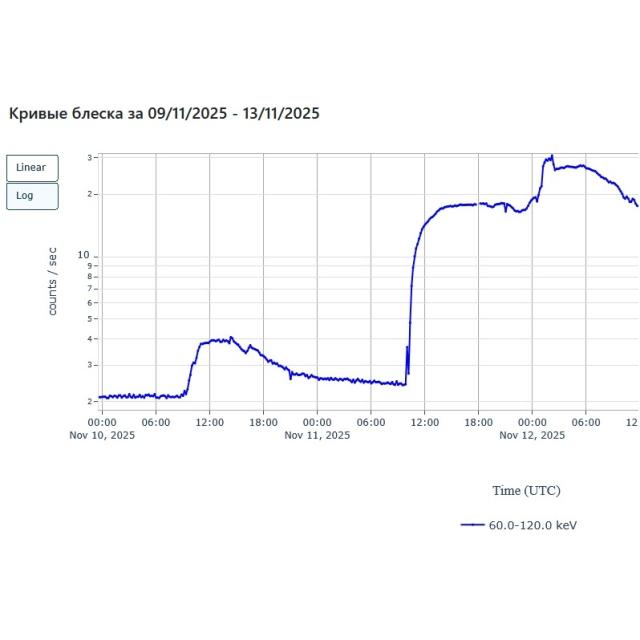
Mikhail Pavlinsky ART-XC Telescope Feels the Rise of Solar Activity in November Large solar flares on November 9–11 2025 were the cause of solar mass ejections, which, in turn, resulted in intense geomagnetic storms. On November 10–14 2025 Mikhail Pavlinsky ART-XC telescope onboard Russian Spektr-RG observatory registered the rise in high-energy proton fluxes in L2.
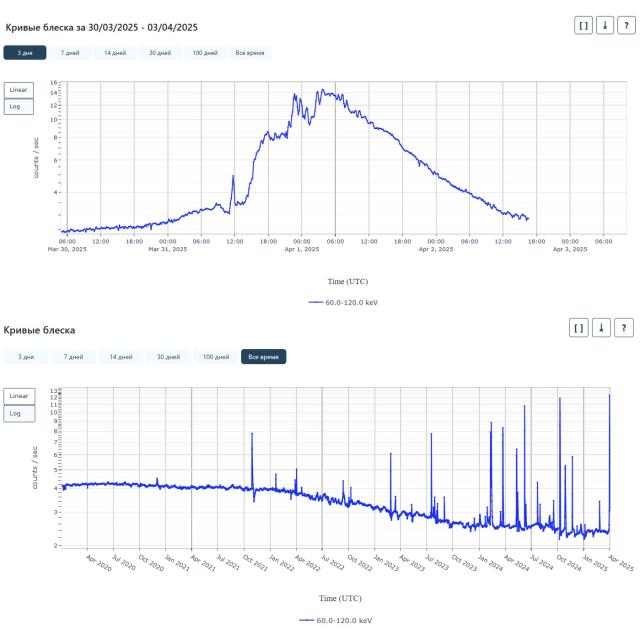
Mikhail Pavlinsky ART-XC Telescope Detected Solar Cosmic Rays Rise On April 1 It was not a joke: on the first day of the month the number of energetic solar protons near the Lagrange point L2 increased significantly to around 14 counts per second. This was almost 7 times higher than usual background, registered by ART-XC detectors, and the most prominent rise in 5 years of monitoring Sun's activity.
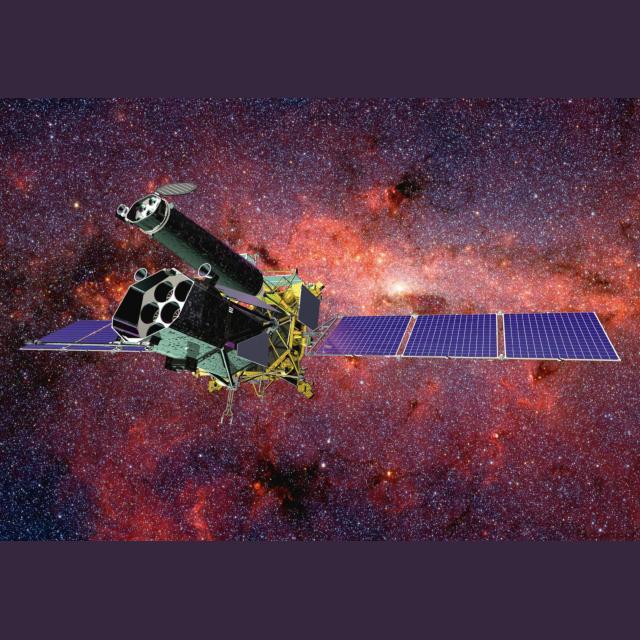
Spektr-RG — Five Years And Counting! On July 13, 2019, Proton rocket launcher with DM-03 booster blasted off from Baikonur cosmodrome, carrying Russian X-ray observatory Spektr-RG. Today, we name some — but by no means the only — fascinating results of its work in these five years.
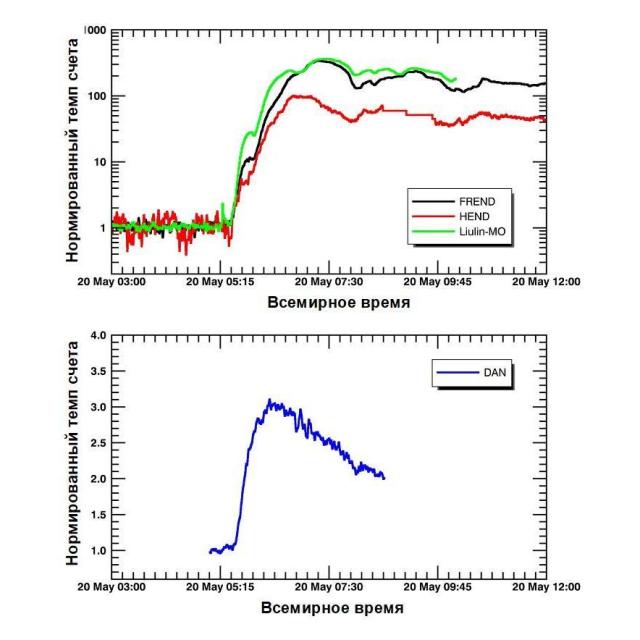
Sun Hits Mars On 20th May 2024 IKI instuments, working near the Red Planet, caught it and stayed safe.
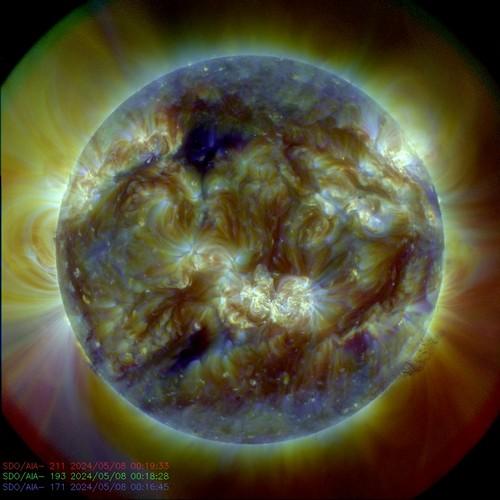
The Most Intense (As Of Now) Geomagnetic Storm Of the XXIst Century On May 10-12, 2024 Earth's magnetosphere experienced the most dramatic perturbations in this century, caused by the extreme solar activity and, specifically, coronal mass ejections, which occured on May 7-9, 2024.